

Your application, clearly planned
Austria education consultants in Hyderabad and across India
Videsh Consultz provides counselling for students planning to study in Austria from its main office in Hyderabad and through online support across India. Our country guidance covers course and university selection, admission applications, scholarship and education-loan preparation, student visa documentation and pre-departure planning.
Requirements and deadlines vary by university and intake. We check the current rules for each student’s shortlist instead of relying on one generic country checklist.
- 01Profile review
- 02University shortlist
- 03Application & funding
- 04Visa & departure

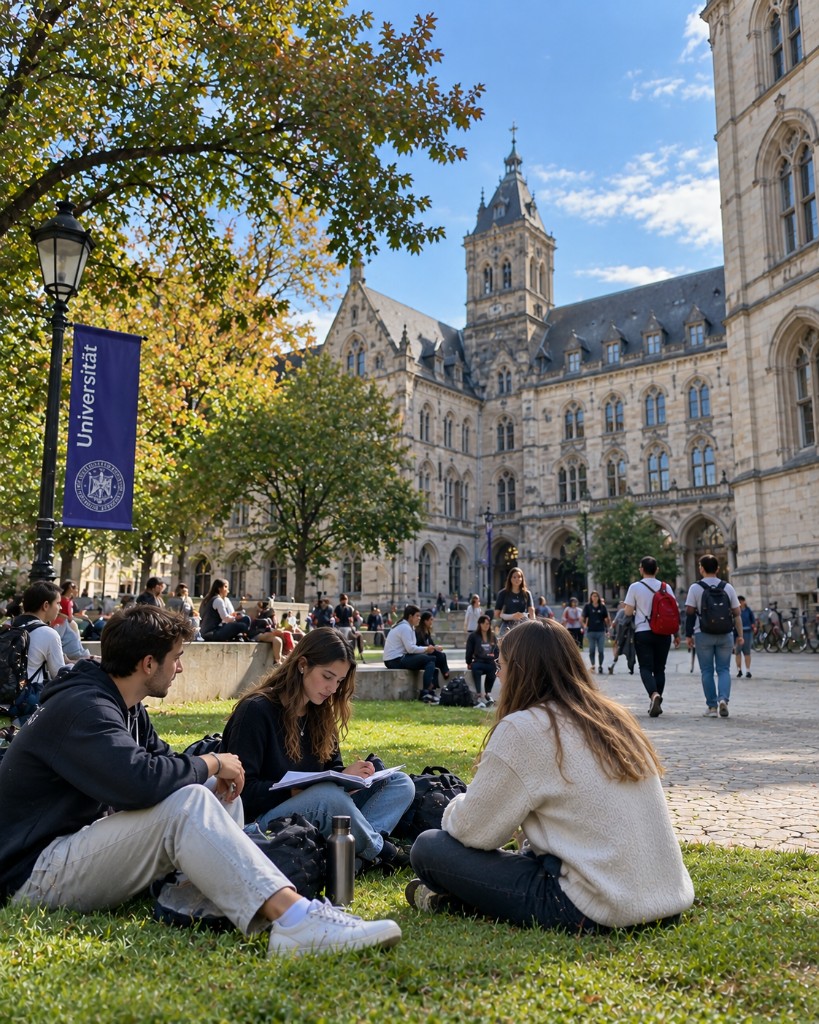

Who thrives studying in Austria
Austria suits students of engineering, applied sciences, business, music and the arts, social sciences and hospitality — subjects taught at classical research universities as well as practice-oriented universities of applied sciences, where teaching stays close to industry.
It is a good fit for students who want German-language immersion with a high standard of public services, safe cities and easy access to the Alps and to neighbouring countries. The country is compact, so a degree in Vienna, Graz, Linz or Innsbruck still feels connected. Students who plan ahead do best, since admission, visa and residence steps run on separate calendars.
Entry requirements
- For a bachelor’s programme: a completed secondary qualification recognised in Austria — 12 years of schooling for most Indian applicants — plus the transcripts and certificates the institution asks for.
- For a master’s programme: a relevant bachelor’s degree, with any subject-specific prerequisites set by the programme.
- German-taught programmes: a German language certificate at the level the programme requires (ÖSD, Goethe or an accepted equivalent).
- English-taught programmes: IELTS, TOEFL or an accepted equivalent, at the band the programme sets.
- Documents not in German or English usually need a certified translation, and some applicants need a recognition or nostrification step for their foreign qualification.
How the application process works
- Shortlist programmes and confirm entry requirements, tuition, any semester fees and the deadline for your intake.
- Prepare and translate documents (degree certificates, marks statements, passport, photographs, language proof, recommendation letters, motivation letter).
- Apply directly to the institution — public universities, universities of applied sciences and private institutions each run their own admissions.
- Complete any entrance examination or interview the programme requires.
- Receive and accept your admission letter and complete enrolment steps with the university.
- Apply for your student visa with the admission documents and financial evidence the authorities require.
- After the visa is granted, travel, arrange accommodation, register your residence and complete enrolment on arrival.
Funding your studies
Austrian public universities charge tuition that depends on nationality, institution and programme: many EU students pay no tuition but do pay a small student union and insurance fee each semester, while non-EU students are generally charged an annual amount set nationally. Universities of applied sciences and private institutions decide their own fees, and some programmes — particularly certain postgraduate ones — charge all students. Treat every figure as institution-specific and confirm it on your shortlist.
Grants and scholarships are offered by Austrian organisations, foundations and universities to international students, on their own criteria and deadlines. Education loans from Indian banks are another route: see our loans page, and ask us for a cost sheet covering tuition, semester fees, rent, insurance and living costs.
Documents you will usually need
Institutions and the Austrian mission ask for overlapping sets of paperwork, and document recognition often takes longer than students budget for. Preparing and legalising everything early keeps the timeline calm. The full list is below.
After graduation
Austrian qualifications follow the Bologna structure — a three-year bachelor’s and a two-year master’s — so progression to further study across Europe is straightforward. Graduates may apply for post-study job-search time under the rules in force at the time; the conditions are set by Austrian authorities and must be confirmed for your intake before you plan around them.
Next steps with Videsh Consultz
Book a free consultation: we will assess your profile against realistic programmes, confirm the current requirements, fees and grant calls for your shortlist, and map a month-by-month plan covering applications, language tests, your visa file and pre-departure.
Checklist for application
- Valid passport
- Passport-size photographs (as specified by the institution and mission)
- Secondary school certificate (SSC / 10th standard)
- Higher secondary certificate (Intermediate / 12th standard)
- Bachelor’s provisional certificate (for master’s applicants)
- Bachelor’s original degree certificate
- Consolidated marks statements
- Semester-wise marks statements
- Experience certificate, if applicable
- Recommendation letters — typically two, from academics who know your work
- Motivation letter where the programme asks for one
- German or English language proficiency certificate
- Financial evidence requested for the visa
Last updated 2026-09-28